Spain throws a serious party roughly every other week, which is exactly the problem. When you have two weeks of guarded vacation and a partner who would rather not spend it shoulder-to-shoulder with a stranger's selfie stick, "just go to a festival" isn't a plan. The smarter move is to pick one festival worth anchoring a Spain road trip for couples around, then drive the region it sits in while the wine is still in your glass and the crowds are behind you. Below are five festivals that earn that role — roughly one per season — and the couple-scaled routes each one unlocks. The verdict comes down to your calendar and your appetite.
The short version
Picture five very different evenings. In March, you are on a Valencia terrace at midnight watching an entire city's worth of sculpture go up in flame. In April, you are spinning through a sevillana in a striped tent in Seville with a glass of chilled sherry in hand. In late June, you are on a hillside outside Haro, soaked head to toe in red wine, laughing. In July, you are on a Pamplona balcony at 8 a.m. as the bulls thunder past below. In September, you are in Barcelona watching fireworks detonate over the Magic Fountain to close out summer.
None of them overlaps. Each one drops you in a different corner of the country, beside a different glass of wine.
The trick isn't catching a Spanish festival. It's catching the right one — then driving away before the magic wears off.
If you just want the snapshot before the detail:
- Las Fallas — Valencia, mid-March, fire and spectacle
- Feria de Abril — Seville, late April, flamenco and sherry
- La Batalla del Vino — Haro (La Rioja), June 29, wine country at full tilt
- San Fermín — Pamplona, early July, adrenaline and history
- La Mercè — Barcelona, late September, Catalan street theater
Las Fallas, Valencia — fire, then the Mediterranean (March)
Valencia spends a year building hundreds of towering satirical sculptures called fallas, parks them in every neighborhood, and then, on the night of March 19, burns nearly all of them to the ground. In between come the mascletàs — deafening daytime gunpowder symphonies in the Plaza del Ayuntamiento at 2 p.m. that you feel in your sternum. The UNESCO-listed festival officially runs March 1–19 in 2026, with the real intensity packed into the final stretch, March 15–19. The Nit del Foc fireworks land on the 18th; the Cremà, the great burning, closes it on the 19th.
For two of you, the move is a booked terrace for the Cremà and earplugs for the mascletà. Then drive out: the rice paddies of L'Albufera, where paella was actually born, are about 25 minutes south — lunch in El Palmar is non-negotiable. An hour west sits Utiel-Requena, quietly turning out bold Bobal reds and crisp cava far from the tour buses.
Feria de Abril, Seville — flamenco, sherry, and Andalusia (April)
Two weeks after Holy Week, Seville builds a temporary city of more than a thousand striped casetas and dances for six days straight. The 2026 Feria runs April 21–26, opening the night before with the pescaíto fish dinner and the midnight switch-on of the lights. Days belong to horses and carriages; nights belong to sevillanas, rebujito (sherry cut with soda), and flamenco dresses worn entirely without irony. Many casetas are private, but public ones welcome anyone game to dance.
This is the romantic, ceremonial end of the spectrum. Learn four steps of a sevillana beforehand and you will not regret it. From Seville, the driving is glorious: Jerez de la Frontera and its sherry bodegas sit about an hour south, and Ronda, perched over its gorge at the head of the white-village route, is roughly an hour and three-quarters away. Prefer solemn grandeur to revelry? Semana Santa (March 29–April 5 in 2026) is the same city in a very different key.
La Batalla del Vino, Haro — the wine-country festival (late June)
This is the one we send wine couples to. Every June 29, the feast of San Pedro, the Rioja town of Haro hauls thousands of people in white up to the cliffs of Riscos de Bilibio, about four miles out, and they spend the morning drenching each other in red wine. By midday everyone streams back to the Plaza de la Paz, stained purple and grinning. The surrounding festivities run roughly June 27–30.
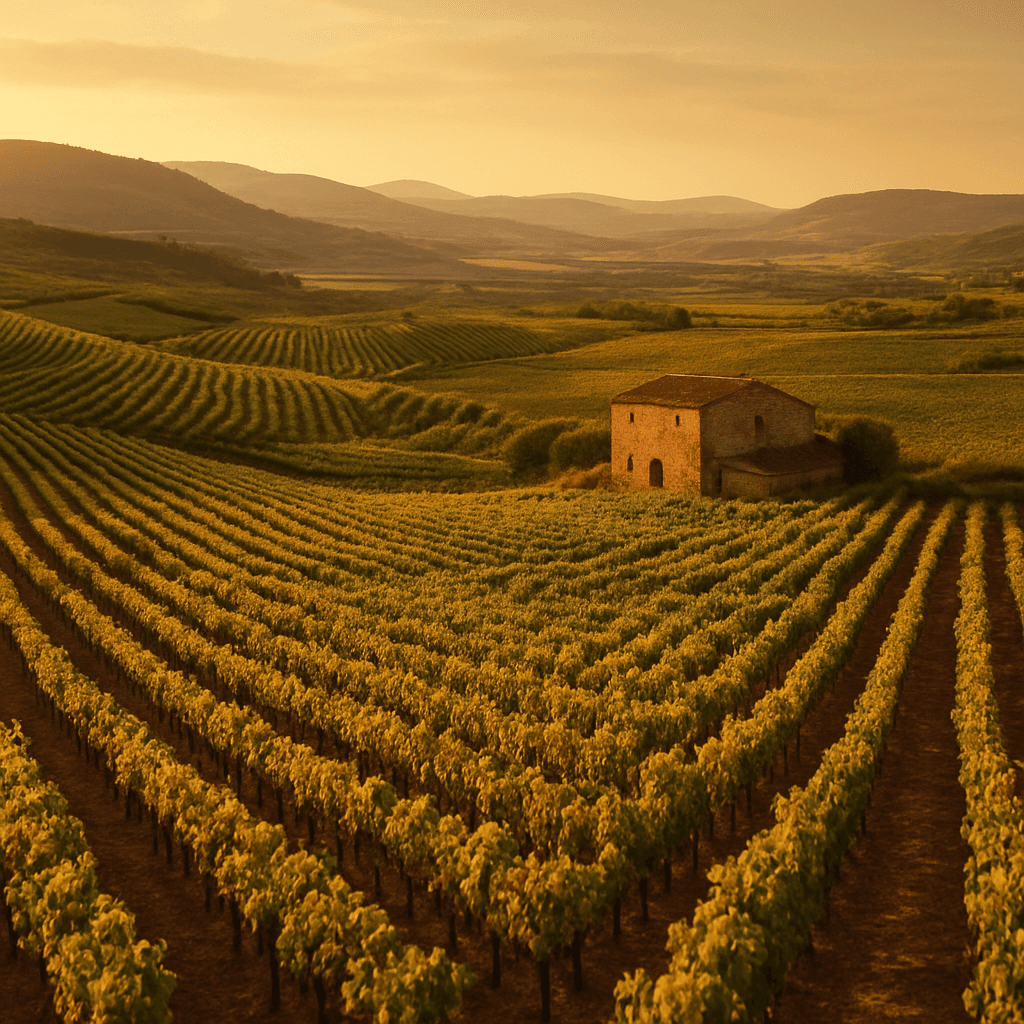
What makes Haro unbeatable for a couple's driving trip is what is left standing once you towel off. Its Barrio de la Estación holds the highest concentration of century-old wineries on earth, all within a short walk of one another — Muga, CVNE, La Rioja Alta, López de Heredia. Muga is the rare bodega still making its own barrels on-site; its tasting bar takes walk-ins and a full tour runs about $27 (€25). Thirty minutes south, in medieval Laguardia and Elciego, Frank Gehry's titanium-ribboned Hotel Marqués de Riscal rises over the vines like a spilled jewel box, Michelin dining room and all (book that table six to eight weeks out).
Nowhere else can you get drenched in red wine by 11 a.m. and be tasting a gran reserva — dry, composed, delighted — by two.
San Fermín, Pamplona — adrenaline, then the Basque coast (July)
Hemingway's festival still runs exactly as advertised: nine days of nonstop fiesta (July 6–14 in 2026), kicking off with the noon txupinazo on the 6th, with the bulls released down an 800-yard course at 8 a.m. every morning from the 7th onward and fireworks every night. Here is the honest part: you do not have to run, and plenty of thoughtful travelers won't want to watch the bull events at all. It is the most crowded and most divisive festival on this list. If the energy and the history pull you, a reserved balcony is the only real vantage point — then wear the white-and-red, soak up the all-night street life, and leave the bulls to the bulls.
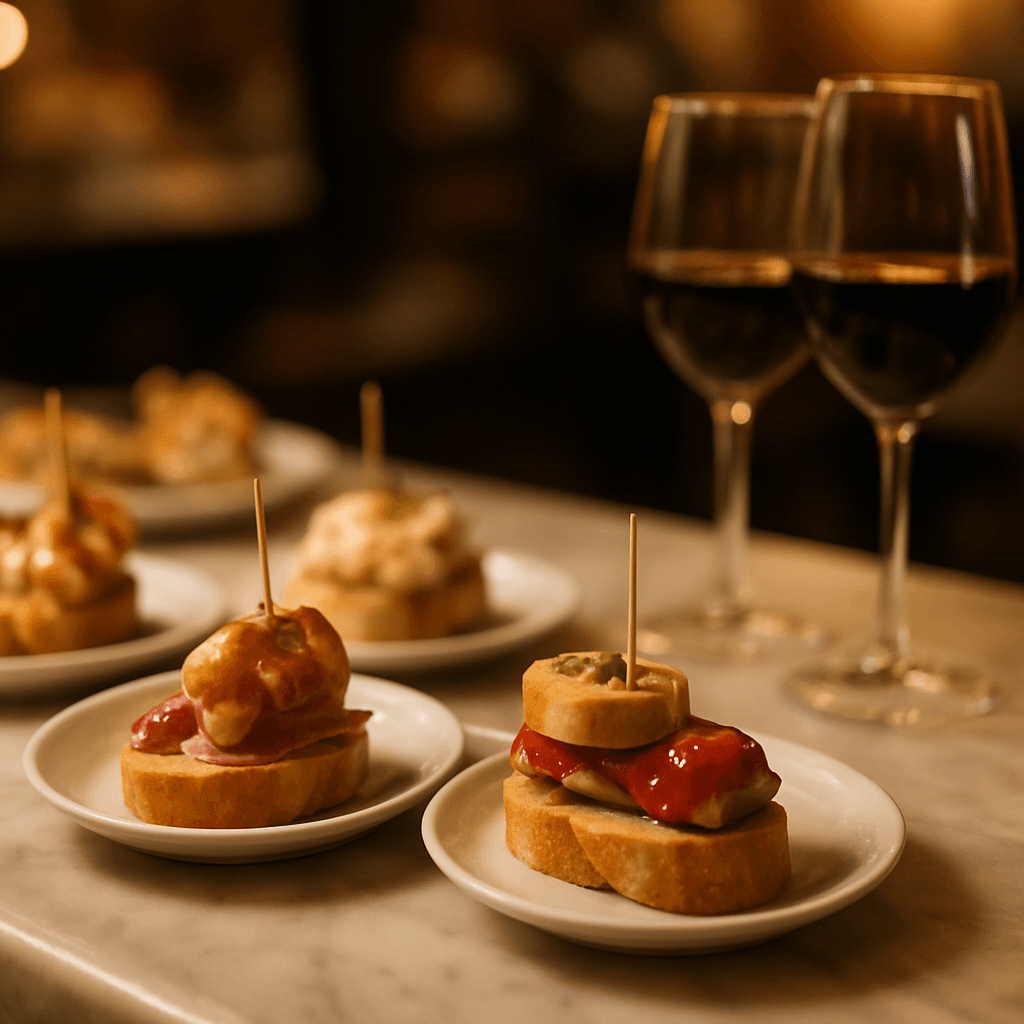
The decompression is the reward. San Sebastián, an hour north, has arguably the best pintxos crawl in the world and a staggering Michelin density. Half an hour further, Getaria pours flinty Txakoli and grills whole turbot over coals; Bilbao's Guggenheim is a bit over an hour west.
La Mercè, Barcelona — Catalan spectacle and the Costa Brava (September)
Barcelona's patron-saint blowout (September 23–27 in 2026, feast day the 24th) is the city at its most alive and the least bucket-list-pressured option here: human towers (castells) in Plaça de Sant Jaume, fire-running correfocs with costumed devils down Via Laietana, parades of giants, and a closing Piromusical that sets fireworks to music over the Montjuïc fountains. Most of the 500-plus events are free, and the end-of-summer warmth makes the whole thing feel like a long, golden exhale.
Crucially, you do not want a car in Barcelona during La Mercè (or inside its low-emission zone generally). Pick one up afterward and point it at wine: Penedès cava country is about 45 minutes out, where Codorníu and Freixenet take walk-ins. Priorat's dramatic slate-terraced reds are two hours southwest, almost entirely by appointment. Or aim northeast for the coves and Dalí country of the Costa Brava, about ninety minutes away.
Driving Spain as a couple: the logistics
A few things American travelers should know before the keys land in your palm. Rental cars default to manual transmission, so reserve an automatic specifically and expect to pay more for it. Bring an International Driving Permit — it is officially required alongside your US license, and AAA issues them in about ten minutes before you fly.
The golden rule for every festival on this list: the celebration turns the city center into a car-free zone. Base yourself just outside, or use your hotel garage and walk in. For Pamplona and Barcelona especially, leave the car parked for the duration and collect it when you drive out to wine country. Some motorways (autopistas) still charge tolls, easily paid by card, and big cities run low-emission zones that rental fleets are generally cleared for — worth a quick confirmation at pickup. On the wine days, pace yourselves: two or three tastings, one long lunch. That is the boring stuff that makes a Spain road trip for couples actually work.
The verdict: which festival fits your Spain road trip for couples
Choose Las Fallas if you want pure spectacle and don't mind noise — it is the loudest, most pyrotechnic option, and Valencia is a wildly underrated food city.
Choose Feria de Abril if you want romance and ritual: flamenco, sherry, horses, and the warmest welcome in Andalusia.
Choose the Batalla del Vino if you are here for the wine first. Nothing else puts you this close to legendary bodegas, and the battle itself is a one-morning lark you will retell for years.
Choose San Fermín if adrenaline and history pull you and you are genuinely at peace watching rather than running — then exhale on the Basque coast.
Choose La Mercè if you want a great city at its best, zero pressure, and the easiest glide into cava and coastline.
Do two if your calendar allows. Since none overlap, plenty of couples anchor a spring trip on Fallas or Feria and come back in fall for La Mercè.
Let Freed Travel build it around you
That last part — matching the festival to the two of you — is the part we love. Tell us which one lights you up and how you like to travel, and we'll design a custom Spain road trip around it: the right base towns, the winery reservations that are genuinely hard to get, a car that won't strand you, and not one logistic left for you to untangle.