You've narrowed your Spain road trip for couples down to wine country — good instinct. Now the harder call: Rioja or Ribera del Duero? They sit barely two hours apart in northern Spain, both built on the same noble grape, both made for a slow drive with someone you like. But they deliver very different trips. One is polished, walkable, and stacked with tapas bars and architect-designed wineries. The other is wilder, quieter, and home to some of the most coveted reds on earth. Here's how to choose between them — and why, with a rental car, you might not have to.
The short version
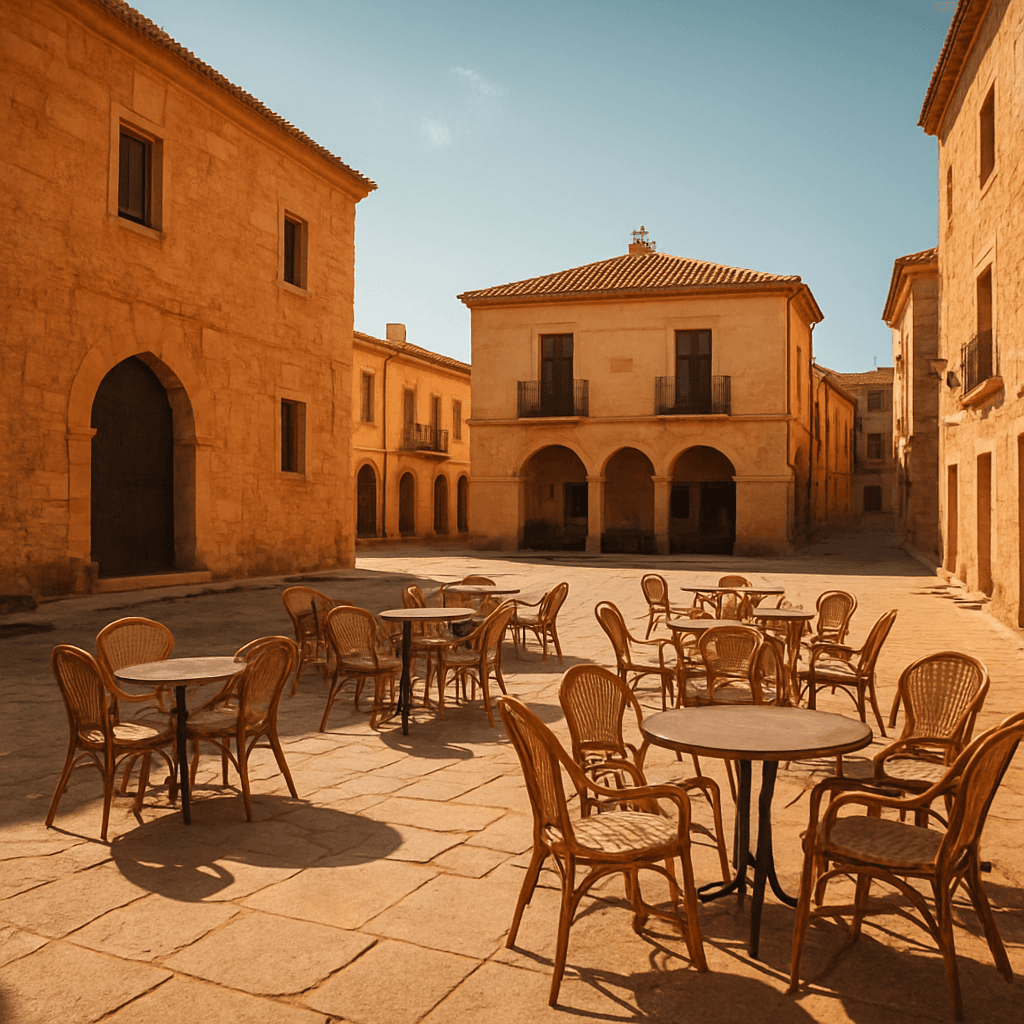
Picture two evenings. In the first, you're an hour from Bilbao in a soft green river valley, wandering a single tapas-packed street in Logroño with a glass of silky Crianza in hand, deciding which medieval winery to walk to tomorrow. In the second, you're high on a wind-scoured plateau an hour and a half from Madrid, the only diners in a quiet Peñafiel restaurant, a castle lit on the ridge above you and a glass of something dark and powerful on the table. Same grape. Two completely different nights.
That's the real choice between these regions. If it helps to see it laid out:
- Rioja is the warmer welcome — green, walkable, social, and easy. Lively towns, world-class tapas, classic oak-aged reds, and architect-designed wineries you can reach on foot. The lower-effort, higher-comfort option, and the one most first-timers fall for.
- Ribera del Duero is the connoisseur's quiet. Stark high-plateau beauty, ridgeline castles, fewer crowds, and bold, structured reds — the home of cult bottles. You'll drive a little more and dine a little simpler, in exchange for solitude and serious wine.
Rioja: the easy, joyful one
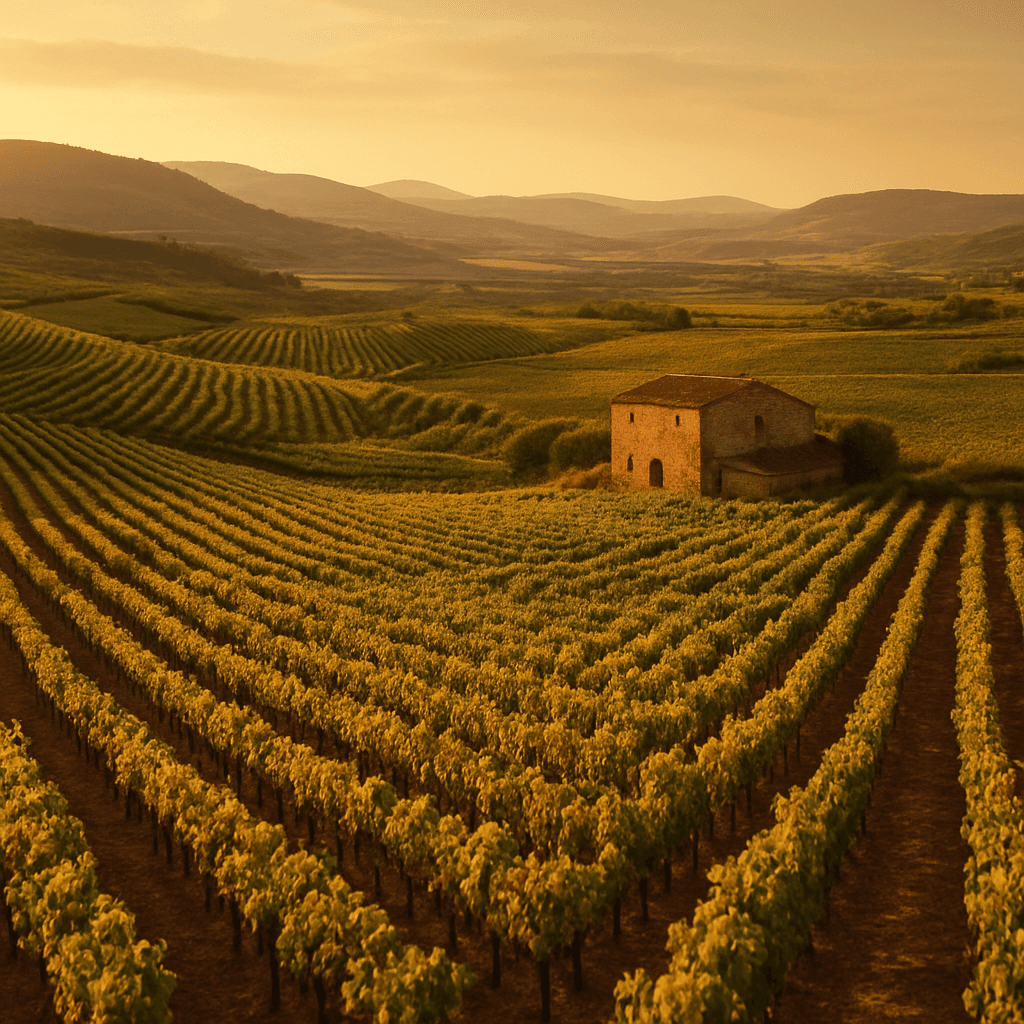
Rioja is the region most American couples picture when they imagine Spanish wine country, and it earns the reputation. The landscape is soft and green, the Ebro River winding past medieval hill towns and a thousand-plus bodegas. The wines are Tempranillo-driven blends, traditionally aged in American oak, which gives the classic Riojas their silky vanilla-and-leather character. You'll see the aging classifications everywhere — Crianza, Reserva, Gran Reserva — a useful shorthand for how long a wine has rested before release.
What makes Rioja a dream for a couples' trip is how little friction there is. Base yourselves in Logroño, the regional capital, and you're a short stroll from Calle Laurel, a single street packed with pinchos bars where a small plate and a glass of Crianza run a few dollars. Spend an evening drifting from grilled mushrooms to jamón croquettes — it's one of the great romantic rituals in Spain, and you'll never need the car.
The shortest day in Rioja is the one where you never start the engine: Haro in the morning, tapas at night, every glass within walking distance.
For the wineries themselves, Haro is the heart of it. The town's Station Quarter clusters legendary houses within walking distance of one another, so you can tour two or three on foot and leave the driving for the day's edges. Out in the vineyards, the architecture turns spectacular: Frank Gehry's titanium-ribboned hotel and winery at Marqués de Riscal in Elciego, and Santiago Calatrava's wave-roofed Ysios near the walled hilltop town of Laguardia. Riscal's hotel is the splurge — a design pilgrimage with a Michelin-level restaurant attached. Laguardia itself is worth half a day: you can't drive inside the walls, so park below, take the lift up, and wander the honeycomb of cellars beneath the cobbles.
A practical romance note: nearly every winery here requires a reservation, and tastings are guided. Book a week or two ahead in high season, and decide early who's driving — Spain's drink-drive limits are strict and the Guardia Civil runs checkpoints in wine country.
Ribera del Duero: the bold, quiet one
Drive southwest and the mood shifts. Ribera del Duero sits high — most vineyards are planted between 2,500 and 3,100 feet, where scorching days collapse into cold nights, sometimes a 30°F swing. That diurnal drama is the region's secret: it concentrates the fruit and produces reds of real power. The grape is the same Tempranillo, here called Tinto Fino or Tinta del País, but the wines are darker, denser, and more structured than Rioja's — built to age. This is the home of cult bottles like Vega Sicilia and Dominio de Pingus, names that move serious collectors.
The landscape matches the wine. Instead of green valleys, you get a severe, beautiful high plateau in browns and ochres, the Duero River cutting through and medieval castles crowning the ridgelines. The 10th-century castle at Peñafiel stretches some 200 meters along its hill and now houses a wine museum — the region's signature image. Peñafiel and Aranda de Duero are your two main bases; Aranda is the larger town, famous for the ancient cellars carved into the rock beneath its streets, where guided tours wind through 13th-century tunnels for a few dollars.
Rioja invites you in. Ribera makes you earn it — and then pours you something you'll remember longer.
The wineries reward the effort. Protos sits dramatically below Peñafiel castle; Portia, designed by Norman Foster, is an easy, striking stop near Aranda; estates like Arzuaga Navarro, Emilio Moro, and Pago de Carraovejas turn out benchmark bottles. The trade-off is that this is genuinely wine country, not a tourism machine. Towns are smaller and sleepier, restaurants fewer (though the wood-fired roast lamb, lechazo, is reason enough to come), and you'll do more driving between stops. For a couple who wants the wine front and center, with quiet evenings and a sense of having gone somewhere most visitors skip, that's the appeal — not the drawback.
Driving both: the two-hour secret
Here's the thing most "vs." pieces bury: you don't necessarily have to choose. Logroño to the heart of Ribera is roughly 130 miles, about a 2 to 2.5-hour drive on good roads — an easy half-day with a long lunch in between. That makes the two regions natural bookends of a single self-drive loop, and it's exactly the kind of trip a rental car unlocks and a coach can't.
A clean week looks like this: fly into Bilbao, pick up the car, and spend three nights in Rioja (Haro or Logroño as your base) easing in with walkable tapas and the architectural wineries. Then make the scenic drive south, stopping at a roadside winery for lunch, and settle two or three nights in Peñafiel for Ribera's bolder reds and castle-town quiet. Loop back toward Bilbao, or continue south and fly home from Madrid, about 1.5 to 2 hours from Ribera. The pacing rewards couples: dense and social at the start, slow and rural at the finish.
A few road notes for American drivers. Spanish rental cars are usually manual, so request an automatic when you book. Distances between individual wineries — and between wineries and your hotel — can run longer than they look on the map, especially in Ribera. And again: agree on a designated driver for tasting days, or build in a private driver for the big winery afternoons so you can both actually enjoy the pours.
The verdict: which should you choose?
- Choose Rioja if this is your first Spanish wine trip, you want a romantic base where you can walk to dinner, or food matters as much as wine. The tapas culture, walkable towns, and polished tourism infrastructure make it the lower-effort, higher-comfort option — ideal for couples who'd rather sip and stroll than log highway miles.
- Choose Ribera del Duero if you're real wine people chasing structure, power, and prestige; if you've done Rioja already; or if a quieter, more dramatic landscape with fewer crowds sounds like the point. You'll trade some convenience for solitude and serious bottles.
- Do both if you have five days or more. Two-plus hours of beautiful driving is a small price for tasting the full arc of Spanish Tempranillo — silky and classic in the north, bold and brooding in the south — and a self-drive trip is the only way to string them together on your own schedule.
Let us build the trip around you
The honest answer to "Rioja or Ribera?" is that the right call depends on you — your pace, your palate, how much you want to drive, and what a perfect evening looks like for the two of you. That's the part a comparison can't finish.
At Freed Travel, that's exactly what we do. Tell us how you like to travel and we'll design a custom Spain road trip that routes you through the wineries, towns, and tables that fit you — reservations handled, drives mapped, a private driver slotted in for the tasting days if you'd rather not pick a designated driver. One region or both, four days or ten, we'll build it around you.