Spain Holidays & Festivals: Timing a Spain Road Trip for Couples
Here's the thing nobody tells you when you book a Spain road trip for couples around a famous fiesta: the festival and the trip you actually want are often at war. The same week that fills Valencia with fireworks empties its restaurants of tables and its streets of parking. The same holiday that closes Seville's cathedral for a stunning procession also closes the bodega you drove two hours to taste at. Get the calendar right and a festival becomes the heart of your trip. Get it wrong and it's a logistical wall. This is how to tell which is which — and when to plan around the date entirely.
The short version, told as two trips
Picture the same couple, same rental car, two different weeks in September.
In the first, you roll into Logroño on the 21st. The capital of La Rioja is mid-celebration for the wine harvest, the air smells of crushed grapes and grilled lamb, and Calle Laurel's tapas bars are three-deep with locals pouring young wine into shared glasses. You drink it in, sleep it off, and the next morning drive forty minutes to a winery that's open, unhurried, and thrilled to see you. The festival was the seasoning, not the meal.
In the second, you aim for Buñol on the last Wednesday of August for the world's biggest tomato fight. You spend the morning soaked in pulp with twenty thousand strangers, half of them on a stag weekend, then discover the town has nothing else for you and the drive back to a real dinner is long. One was a great day. Only one was a great trip.
The best Spanish festival for a couple's road trip is usually the one that rewards staying, not just showing up.
That's the lens for everything below.
The marquee fiestas — and who they're really for
Las Fallas (Valencia, roughly March 1–19; the big days March 15–19). Valencia spends two weeks building satirical sculptures the size of buildings, then burns them all on the final night, the Cremà, after the year's most ferocious fireworks display on the Nit del Foc. It is genuinely one of Europe's great spectacles, and it is also three-plus million people, near-total street closures, and hotels at full occupancy booked months out. As a self-drive base it fights you at every turn. If Las Fallas is the point, park on the edge, walk everywhere, and don't pretend it's a driving week.
Semana Santa (Holy Week, nationwide — March 29 to April 5 in 2026, March 21–28 in 2027). Hooded processions, candlelight, brass and silence; Seville does it most famously, but Málaga, Valladolid, and Zamora are spectacular too. The catch is closures. Maundy Thursday and Good Friday (April 3 in 2026) thin out opening hours across the country, and major sights pause — Seville's Real Alcázar shuts entirely on Good Friday. Old-town streets close for processions on a schedule that has nothing to do with where you parked. Beautiful, moving, and best experienced from a single base rather than a touring itinerary.
Feria de Abril (Seville, April 21–26 in 2026). Two weeks after Holy Week, Seville throws its other great party: a fairground of casetas, flamenco dresses, sherry, and a daily parade of Andalusian horses. It's romantic and electric — with one honest caveat for visitors. Most casetas are private, members-and-guests affairs, so without a local connection you'll spend more time outside the tents than in them. Worth building a couple of days around if Andalucía is your trip; not worth a frantic detour.
San Fermín (Pamplona, July 6–14). The running of the bulls. The festival opens with the chupinazo rocket at noon on the 6th, and the bulls run each morning at 8 from the 7th onward. The town's round-the-clock energy is real, but so is the case for sitting this one out: the event is ethically divisive, lodging is scarce and overpriced, and it skews toward a hard-partying crowd. For most couples, Pamplona's old town is lovelier in any other week.
La Tomatina (Buñol, August 26 in 2026). The hour-long tomato fight is pure, ridiculous fun — ticketed now, capped at 20,000, about 38 miles west of Valencia. But it's a day, not a destination, and the crowd runs young and rowdy. Slot it in only if you're already near Valencia and the silliness appeals.
The sweet spot: wine country in fiesta
This is where Spain's festival calendar and a couple's food-and-wine road trip finally pull in the same direction.
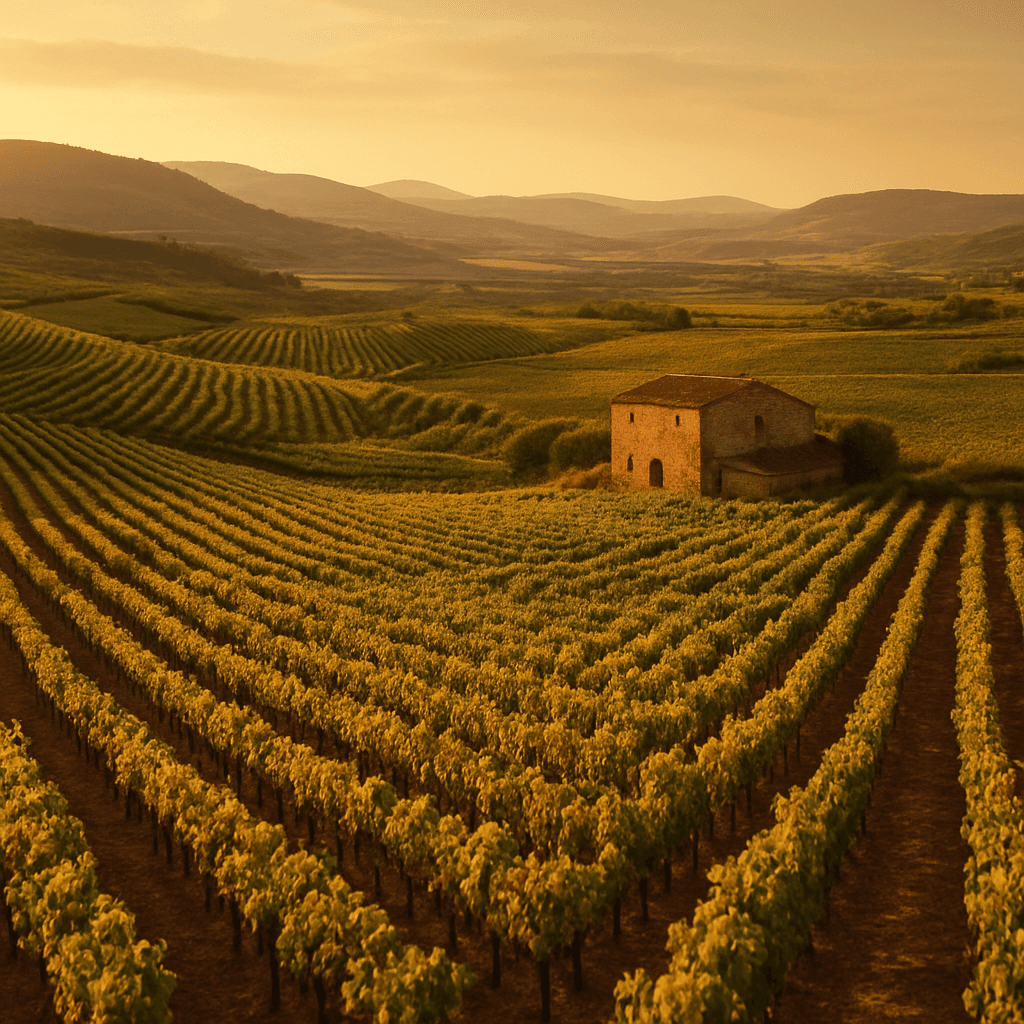
The Rioja Wine Harvest / Fiestas de San Mateo (Logroño, September 20–26 in 2026). The whole region celebrates the vendimia, peaking on St. Matthew's day, the 21st, when the first must is pressed by foot and offered to the Virgen de Valvanera. The streets fill with peñas and parades, but the real draw is gastronomic: Logroño's Calle Laurel is one of the great tapas streets in Spain, and the surrounding wineries are at their most alive during harvest. It's celebratory without being a siege, and it sits in the center of a region built for driving.
Time your trip to the harvest and the festival isn't a detour from the wine — it is the wine.
La Batalla del Vino de Haro (June 27–30; the wine battle the morning of June 29). On St. Peter's Day, dress head to toe in white, climb to the cliffs of Bilibio, and get drenched purple in a good-natured fight fought entirely with red wine. The genius move for a couple: do the battle in the morning, then clean up and spend the afternoon in Haro's Barrio de la Estación, the dense cluster of century-old bodegas around the railway station — several of the most storied names in Rioja, many open for tours and tastings if you book ahead. Chaos, then class.
Olite's Fiesta de la Vendimia (Navarra, early September). Smaller, quieter, and set against a fairytale royal palace just south of Pamplona — a charming harvest-season stop if your route runs through Navarra's wine country.
Logistics: how the calendar bends your driving
The festivals you'll feel most as a driver are the ones you didn't plan for.
National holidays are the first. In 2026 the fixed ones include New Year's Day, Epiphany (January 6), Good Friday (April 3), Labour Day (May 1), the Assumption (August 15), the National Day (October 12), and Christmas. Add regional and local saints' days and you get puentes — long-weekend "bridges" — when small-town wineries and family restaurants simply close. The bodega you mapped may be dark on a Tuesday you'd never suspect.
Then there's August. Much of Spain takes its vacation, and independent restaurants and smaller wineries hang the "Cerrado por vacaciones" sign for weeks. Cities like Madrid can feel half-asleep while the coast overflows. If your itinerary leans on intimate, owner-run places, August is the month to be most careful — call ahead, every time.
Sundays close most shops nationwide, and Spanish rhythm runs late regardless: lunch from around 2 p.m., dinner often until 11:30. Build your drives around long midday stops rather than fighting the clock. (One date note: clocks spring forward the last weekend of March and fall back the last weekend of October.)
A few driving notes for Americans. Rental cars in Spain are overwhelmingly manual, so reserve an automatic early and expect to pay more for it. Bring an International Driving Permit alongside your license. Major cities now enforce low-emission zones (ZBE) that restrict traffic in historic centers — during any festival you'll want to park on the edge and walk anyway, which neatly sidesteps the issue. Toll motorways (the AP roads) take U.S. credit cards, and they're worth it for the time saved between regions.
The verdict, by who you are
Choose a wine-harvest fiesta (Rioja's San Mateo, Olite, or the Haro wine battle) if you want festival energy that adds to a food-and-wine road trip instead of derailing it. This is the most reliable win for two travelers who care about great meals, open cellars, and room to roam by car. September is the standout month.
Choose Semana Santa or Feria de Abril if grand spectacle is the goal and you're happy to base yourself in Seville (or Málaga, or Valladolid) rather than cover ground. Accept the closures as part of the bargain, book far ahead, and let the car rest.
Admire from a distance — or actively plan around — Las Fallas, San Fermín, and La Tomatina unless that single event is the entire reason for the trip. They're magnificent and they're crowd machines; none plays nicely with a relaxed driving itinerary.
Do both if your dates allow: anchor on a harvest fiesta for the heart of the trip, then bookend it with a marquee event you've planned for properly — separate base, separate logistics, no improvising.
And whatever you choose, check the local saint's day for every town you'll sleep in. The festival that ruins a day is rarely the famous one. It's the quiet regional holiday that closes the one place you drove all that way to taste.
Let us build the week around you
The hard part isn't picking a festival — it's threading it through a route that keeps the wineries open, the tables reserved, and the drives easy on either side. That's exactly what we do. Tell us what kind of celebration you're after and what you'd rather skip, and we'll design a custom Spain road trip that lands you in the right town on the right day, with the right bottle already waiting. No pressure, no fixed packages — just a trip shaped to the two of you.